Learn English Through Motivation
Consistency Wins the Race | Learn English with Motivational Stories
Do you ever feel like you’re working tirelessly day after day, but absolutely nothing is changing? You look around, and it feels like you are completely stuck in the exact same place while everyone else is zooming past you.
The truth is, most people give up too early. They pray for success, but they simply cannot wait for it to grow. They plant a seed today and expect a magnificent tree tomorrow.
If you feel like quitting your goals today, I want you to remember this powerful truth: A river cuts through a rock, not because of its raw power, but because of its consistency.
When life becomes slow, difficult, or painful, it’s easy to think that your efforts are being wasted. We compare ourselves with others, lose hope, and quit right before our time comes. But life has a beautiful, strange rule: the people who stay patient during the hardest times are always the ones who win in the end.
One of the best ways to build your language skills and your mindset at the same time is to learn English with motivational stories. In this Graded Reader lesson, we are going to explore the true power of patience through the journey of a simple farmer and his slow donkey, Barnaby. If you are practicing your English listening and reading skills while searching for a true mindset shift, you are exactly where you need to be. Let’s dive into the story.
Video Credit: SiRa Wisdom
The Story of the Patient Donkey
Most people give up too early. They pray for success, but they cannot wait for it to grow. They plant a seed today and expect a tree tomorrow.
When life becomes slow, difficult, or painful, they think nothing is working. They compare themselves with others, lose hope, and quit too soon. But life has a strange rule: The people who stay patient during hard times are the ones who win in the end.
My name is Nivi, and this story is about a donkey who taught an entire village the true power of patience.
Chapter 1: The Slow Donkey
In a small, dry village, there lived a poor farmer named Leo. He was not rich, strong, or famous. He only had a tiny house, a few farming tools, and one old donkey named Barnaby.
Barnaby was not fast like a horse, and he was not beautiful. His body was weak, his fur looked dusty, and people laughed whenever they saw him walking slowly down the village roads.
The villagers often mocked Leo. “Why do you still keep this useless donkey? He is too old and works too slowly. You should sell him!”
But Leo always smiled and replied, “Slow does not mean useless.”
Every morning before sunrise, Leo loaded small sacks of vegetables on Barnaby’s back and walked to the market miles away. The journey was hard. The roads were rocky, the weather was hot, and people with fast horses always reached the market first. Leo earned very little money. Sometimes he returned home with unsold vegetables, and there was barely enough food for dinner.
One evening, after another terrible day at the market, Leo sat quietly outside his house. His eyes were full of sadness.
“I work hard every day,” he whispered, “but nothing changes.”
As he spoke, Barnaby slowly walked over and gently rested his head on Leo’s shoulder. Leo smiled sadly. “At least you understand me.”
Chapter 2: A Different Path
The next morning, Leo decided to try something new. Instead of rushing to the market on the main road like everyone else, he chose a longer mountain path.
The villagers thought he was crazy because the mountain road was difficult and dangerous. “Your donkey is already slow,” they laughed. “And now you choose an even longer road!”
But Leo ignored them.
As they walked through the mountains, Leo noticed something special. Along the road, wild fruit trees grew everywhere. Travelers passing through the mountains were always thirsty and hungry, but nobody sold anything there because everyone else took the faster main road.
Leo stopped and thought carefully. The next day, he carried water and fruits along with his vegetables. While crossing the mountain road, tired travelers happily bought food from him. For the first time in months, Leo returned home with extra money.
Weeks passed. Slowly, more travelers began waiting for Leo on the mountain road. They trusted him because he was kind, patient, and always arrived at the exact same time every day.
Meanwhile, the farmers on the main road faced heavy competition. Prices dropped, fights became common, and many went home angry. But Leo kept following the slow mountain path with Barnaby, day after day, month after month.
Chapter 3: The Great Reward
One afternoon, a rich merchant traveling through the mountains saw Leo helping an injured traveler for free. The merchant watched quietly as Barnaby stood patiently beside them, carrying heavy supplies without making a sound.
The merchant was impressed. “You are different from the others,” he told Leo.
Leo smiled. “Life taught me patience.”
The merchant then made an offer. “I need someone honest to transport goods through these mountains every week. Most people refuse because the road is tough. Will you do it?”
Leo immediately agreed. That small opportunity changed his life completely. Over the next few years, Leo slowly earned enough money to buy more land, repair his house, and live peacefully.
But he never forgot Barnaby. Even though people respected him now, Leo still walked beside his donkey every single morning.
One day, a young boy asked him, “How did you become successful?”
Leo looked at Barnaby and smiled. “Because of him.”
The boy looked confused. “But he is just a donkey.”
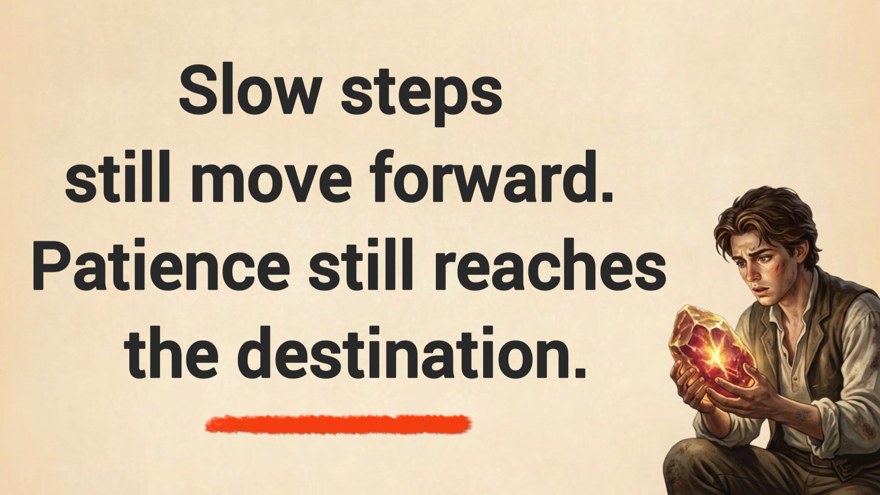
Leo replied, “No, he is the reason I learned patience. Everyone wanted quick success and laughed at slow progress. But this donkey taught me something powerful: Slow steps still move forward. Patience still reaches the destination.“
Chapter 4: The Test of Time
Years later, a terrible storm hit the village. Heavy rain destroyed the main road completely. Trade stopped, and the farmers who depended on the fast road lost everything overnight.
But the mountain path Leo had used for years remained safe because it was built on stronger ground. Now, the entire village depended on Leo’s route for food and supplies.
The same villagers who once laughed at Barnaby now stood silently, watching him walk through the mountains, carrying supplies for everyone.
One old villager lowered his head and said, “We judged him because he was slow.”
Leo replied calmly, “The world often laughs at patience because it cannot see the future.”
The Lasting Lesson
That night, Leo sat beside Barnaby under the stars. Barnaby was very old now, and his steps were weaker than before. Leo gently touched his head.
“You carried more than vegetables,” Leo whispered. “You carried my dreams when nobody believed in me.”
A few days later, Barnaby died peacefully near the mountain road they loved. Leo buried him under a large tree overlooking the valley. The villagers came to visit because everyone now knew the story of the patient donkey.
Near the grave, Leo placed a small wooden sign. It said:
“Fast people may arrive early, but patient people arrive stronger.”
Summary for the Reader
Patience does not mean doing nothing. Patience means continuing to move forward even when you cannot see the results yet.
Many people destroy their future because they cannot survive temporary discomfort. They panic when life becomes slow. But success is not always about talent or speed. Sometimes, success belongs to the person who simply refuses to stop.
A tree takes years before it gives fruit. A river cuts through rock not because of its power, but because of its consistency. Just like Barnaby the donkey, sometimes the slowest journey creates the strongest life.
If life feels slow right now, do not lose hope. Your patience is building something bigger than you can see.
✅️ Motivation life lesson from this story
Here are the core motivational life lessons we can take away from Leo and Barnaby’s journey:
1. Slow Progress is Still Progress
We live in a world obsessed with speed and instant results. We plant a seed today and expect a tree tomorrow. But as Barnaby showed us, slow steps still move forward.
- The Lesson: Do not despise small beginnings or slow progress. As long as you are moving toward your goal, you are outlasting everyone who chose to sit still or quit.
2. The “Fastest” Path is Often the Most Crowded
Everyone rushed to the main road because it was quick, which led to heavy competition, lower prices, and constant fighting. Leo took the difficult, slow mountain path—and found an untapped market filled with wild fruit trees and thirsty travelers.
- The Lesson: When you choose the path of patience and hard work, you face less competition. While others are fighting for quick wins on the crowded main road, your patience allows you to build unique opportunities on stronger ground.
3. Consistency Builds a Stronger Foundation
When the terrible storm hit the village, the fast main road collapsed. However, the slow mountain road survived because it was built on rock.
- The Lesson: Shortcuts often leave you vulnerable when a crisis hits. When you build your skills, career, or character slowly and honestly, you build a foundation that can survive any storm. Quick success can disappear overnight, but patient success lasts.
4. Never Judge Your Current Value by the World’s Opinion
The villagers mocked the donkey because he couldn’t run like a horse. They labeled him “useless” based entirely on his appearance and speed. Yet, in the end, that very same donkey saved the entire village from starvation.
- The Lesson: Do not let people who cannot see your future judge your present value. Your unique strengths—like resilience, reliability, and steady endurance—are often exactly what the world will need when things get tough.
The Ultimate Takeaway: A river cuts through a rock not because of its raw power, but because of its consistency. Patience is not about passively waiting around; it is about actively working and keeping your focus even when the results are currently invisible. If life feels slow right now, don’t change direction out of panic. Your patience is building something bigger than you can see.
✅️ Learn English from this story:
This story is a fantastic tool for improving your English. Because it focuses on simple, powerful storytelling, it contains excellent vocabulary, idioms, and grammatical structures that you can use in everyday conversation.
Let’s break down the best language lessons from the story.
1. Key Vocabulary (Word-by-Word)
Here are the most useful words from the story, explained in simple terms:
- Mocked (verb): To laugh at someone or make fun of them in an unkind way.
- Example in story: “The villagers often mocked Leo.”
- Ignored (verb): To pay no attention to someone or something.
- Example in story: “But Leo ignored them.”
- Merchant (noun): A person whose job is to buy and sell goods, usually in large amounts.
- Example in story: “…a rich merchant traveling through the mountains noticed Leo…”
- Transport (verb): To carry or move things from one place to another.
- Example in story: “I need someone honest to transport goods through these mountains…”
- Destruction / Destroyed (verb): To damage something so badly that it cannot be used anymore.
- Example in story: “Heavy rain destroyed the main road completely.”
- Consistency (noun): Doing something in the same way over time to get a good result.
- Example in story: “A river cuts through rock not because of power but because of consistency.”
2. Idioms and Phrasal Verbs
Phrasal verbs (a verb + a preposition) and idioms make your English sound more natural. The story features several common ones:
| Phrase / Idiom | Meaning | Story Context |
|---|---|---|
| Give up / Quit | To stop trying to do something. | “Most people give up too early.” |
| In the end | Finally, after a long time or a lot of things have happened. | “…are often the ones who win in the end.” |
| Barely enough | Only just enough; almost not enough at all. | “…there was barely enough food for dinner.” |
| Outlast / Overcome | To survive or last longer than a difficult situation. | “…because they cannot survive temporary discomfort.” |
| Overnight | Happening suddenly or very quickly. | “…farmers who depended on the fast road lost everything overnight.” |
3. Grammar Focus: “Used to” vs. “Would” for Past Habits
The story talks a lot about things that happened repeatedly in the past. Look at this sentence:
“But the mountain path Zach used for years remained safe…” “Every morning before sunrise, Zach loaded small sacks…”
When telling a story about past habits or routines, you have three main options in English:
- Simple Past Tense: “He walked to the market.” (Good for a factual action).
- Used to: “He used to take the mountain path.” (Best for past states or habits that don’t happen anymore).
- Would: “Every morning, he would load his donkey…” (Excellent for nostalgic or descriptive storytelling about routines).
4. Pronunciation & Speaking Practice
If you are practicing speaking, pay attention to the contracted forms and silent letters used in the story:
- Contractions: Practice saying “Barnaby’s” (Barnaby is) and “didn’t” (did not) smoothly.
- Silent Letters:
- In the word gently, the “t” is very soft, almost hidden.
- In the word whispered, the “h” is completely silent (
wis-perd). - In the word climbed (similar to tools used in mountains), the “b” is entirely silent (
clime).
💁♀️Tip for Learning: Try to retell this story out loud to yourself in just 3 or 4 sentences using at least two new words you learned today (like mocked or consistency). Speaking a new word right away is the fastest way to remember it!
🙋♂️ Frequently Asked Questions (FAQ)
Q1: How can I learn English with motivational stories?
Learning English through inspiring stories helps you connect vocabulary and grammar to real human emotions. Instead of memorizing boring rule lists, you absorb natural sentence structures, idioms, and context clues while staying engaged and focused on a powerful life lesson.
Q2: What does “Consistency Wins the Race” mean?
This phrase means that regular, steady effort over a long period is far more powerful than sudden, short bursts of energy. Just like the river cutting through solid rock, the person who refuses to stop working will eventually outlast those who run fast but give up when things get difficult.
Q3: Why is patience so important when learning a new language?
Language fluency does not happen overnight. Many learners quit because they expect immediate results and panic when their progress feels slow. True fluency requires a strong foundation built through daily practice, steady listening, and understanding that slow steps still move you forward.
Q4: What is a Graded Reader story?
A Graded Reader is a story written specifically for language learners. It uses simplified vocabulary, clear sentence structures, and predictable grammar patterns. This allows you to practice your English reading and listening skills comfortably without getting overwhelmed by overly complex words.
Conclusion
The story of Barnaby and Leo reminds us that patience is not about passively sitting around and waiting. True patience means continuing to move forward step by step, even when the results are completely invisible to the rest of the world.
Many people destroy their future because they cannot survive temporary discomfort. They panic when life becomes slow or when they hit a plateau in their learning journey. But lasting success is not always about raw talent or extreme speed. More often than not, success belongs to the person who simply refuses to stop walking.
A tree takes years of silent growth before giving sweet fruit. Just like the slow mountain path in our story, building your skills, your career, or your English fluency on a steady foundation will always outlast a shortcut.
A Note from the Curator: > If your journey feels incredibly slow right now, do not lose hope. Your steady consistency is currently building something much bigger than you can see. Keep moving forward!
💬 Over to You!
Did this story change how you view your current struggles? What is one area in your life where you need to practice more patience right now? Leave a comment below and share your thoughts with our global learning community!


 Relationships Quotes3 years ago
337+ Relationship Quotes And Sayings
- Good Morning Quotes1 year ago
100+ Good Morning Quotes to Brighten Your Day: Inspirational, Romantic & Funny Messages with Images
- Quotes1 year ago
300 Winnie The Pooh Quotes To Fill Your Heart With Joy
- Quotes3 years ago
35 Deep Heart Touching One Sided Love Quotes for Her
- Good Morning Quotes3 years ago
57 of the Good Morning Quotes And Images Positive Energy for Good Morning
- Good Morning Quotes3 years ago
35 of the Good Morning Quotes And Images Positive Energy for Good Morning
- Life Quotes3 years ago
284 Broken Heart Quotes About Breakup And Heartbroken Sayings
- Motivational Quotes3 years ago
265 Motivational & Inspirational Quotes About Life to Succeed


